How to store fresh herbs so they last
The recipe wanted 2 tablespoons of chopped cilantro and the store sold you a bunch the size of a bouquet. Stored well, the rest is still green next week. Left in its bag at the back of the fridge, it turns dark and wet within days.
By Hedgehog Chef · · 8-minute read
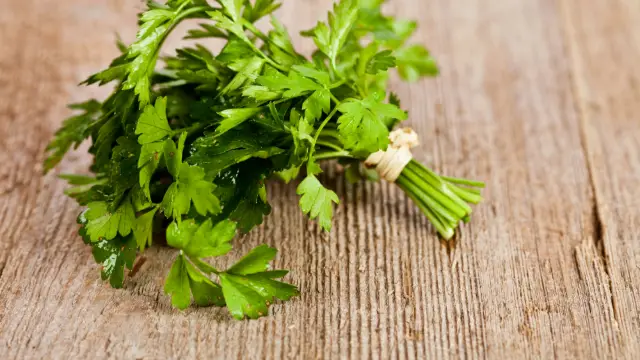
The quick answer
To store fresh herbs, stand tender herbs (parsley, cilantro, mint, dill) in a jar of water in the fridge with a bag loosely over the top, keep basil in water on the counter, and wrap hardy herbs (rosemary, thyme, sage, oregano) in a damp paper towel inside a bag or container in the fridge.
- Tender herbs in water keep 1 to 2 weeks in the fridge, and parsley often lasts longer.
- Basil goes on the counter, out of direct sun. Fridge cold blackens its leaves.
- Hardy herbs keep 2 to 3 weeks wrapped in a damp towel.
- Get the leaves dry before storing. Wet leaves are where the rot starts.
- Freeze what you won't use in time, chopped into ice-cube trays with water or oil.
Tender or hardy: which herb do you have?
Look at the stems. Soft, green, bendy stems mean a tender herb: parsley, cilantro, dill, mint, basil, tarragon, chives. Woody stems mean a hardy one: rosemary, thyme, sage, oregano.
Tender herbs have thin leaves that wilt within hours on a warm counter, so they do best with their stems in water, like cut flowers. Hardy herbs hold their moisture and rot if they sit wet, so they want a damp wrap and no standing water. Oregano does fine either way. Basil is the odd one out, a tender herb that cold damages.
How to store fresh herbs like parsley, cilantro and mint
This works for parsley, cilantro, mint, dill and tarragon.
- Trim the stems. Cut about 1/2 inch off the ends. A cut end that has dried out draws up less water.
- Strip the low leaves. Pull off any leaves that would sit below the waterline. Submerged leaves rot and cloud the water.
- Stand them in a jar with an inch or two of cold water. Give them room: Oregon State University's extension service warns that cramming too many stems into one jar causes early decay.
- Cover loosely with a produce bag or the bag they came in, open at the bottom, and put the jar on a fridge shelf where it won't get knocked over.
- Change the water every day or two, or as soon as it looks cloudy.
The loose bag keeps the leaves humid without trapping water on them. Seal it tight and condensation collects, and the bunch goes slimy from the top down. Oregon State's guide to preserving herbs says parsley, cilantro, mint, oregano and sage can last up to several weeks this way, and suggests a little lemon juice or a vitamin C tablet in the water to slow bacteria.
No room for a jar? A barely damp paper towel inside a zip-top bag, in the vegetable drawer, is the next best thing.
Should you put basil in the fridge?
No. Keep basil on the counter with its stems in a glass of water, out of direct sun, and change the water every day or two. It keeps about a week that way.
Basil is a warm-weather plant, and cold injures it. A Rutgers extension fact sheet on basil puts its best storage temperature at 55°F (13°C) and cites University of California research in which basil held at 50°F to 68°F (10°C to 20°C) for 10 days was markedly better than basil held at 32°F (0°C). A home fridge should run at 40°F (4°C) or below, according to the FDA, which is well into the range that hurts basil. The damage shows as blackened leaves, darkened stems and a fading smell.
If the basil has to go in the fridge anyway, wrap it loosely in a dry paper towel inside a bag and use it within a day or two.
How to store rosemary, thyme and sage
Wrap them loosely in a barely damp paper towel and put the bundle in a zip-top bag or a lidded container in the vegetable drawer. Expect 2 to 3 weeks. Check every few days, rewet the towel if it has dried out, and pull any black or soft sprigs before the rot spreads.
Chives store best the same way, even though they're a tender herb. Sage and oregano also keep in a jar of water. Rosemary that has dried out a little in the fridge is still fine in a braise.
How long do fresh herbs last?
Plan on 1 to 2 weeks for tender herbs in water and 2 to 3 weeks for hardy herbs in a damp wrap, counted from a fresh bunch. These are quality limits set by wilting and rot, and a bunch that was already tired at the store won't reach them.
| Herb | How to store it | Typical life |
|---|---|---|
| Parsley | Jar of water, fridge, bag loosely over the top | 1 to 3 weeks |
| Cilantro | Jar of water, fridge, bag loosely over the top | 1 to 2 weeks |
| Mint | Jar of water, fridge, bag loosely over the top | 1 to 2 weeks |
| Dill | Jar of water or damp towel, fridge | About 1 week |
| Basil | Glass of water on the counter, out of direct sun | About 1 week |
| Chives | Damp towel in a bag, fridge | About 1 week |
| Rosemary, thyme | Damp towel in a bag, fridge | 2 to 3 weeks |
| Sage, oregano | Damp towel in a bag, or a jar of water, fridge | 1 to 3 weeks |
| Any herb, chopped | Ice-cube tray, then a freezer bag at 0°F (-18°C) | A few months (flavor fades slowly) |
| Any herb, dried | Airtight jar in a cool, dark cupboard | Until the smell fades |
Date the bunch when it goes in, or it gets forgotten behind the milk. In Hedgehog Chef's pantry you can give it an expiry date a week out, and “Use it up” shows it before it turns, with recipes that use it.
Should you wash herbs before storing them?
Wash them right before you use them, unless the bunch is gritty or muddy. Every drop of water left on the leaves in a closed bag gives rot a head start.
If you do wash first (sandy cilantro, a bunch from the farmers' market), swish the herbs in a big bowl of cold water and lift them out so the grit stays at the bottom. Spin them dry, then roll them in a clean towel until you can't see any water. Rutgers advises drying washed basil before storage to prevent decay, and the same goes for every herb. Skip soap and produce washes, which the FDA advises against for all produce.
Can you freeze or dry fresh herbs?
Yes to both. Freeze the soft, leafy herbs and dry the woody ones.
Freezing
Frozen herbs go limp when they thaw, so they're for cooking: soups, stews, sauces, braises. They won't work as a garnish. Two ways to do it:
- Ice cubes. Chop the leaves, put a pinch in each cup of an ice-cube tray and cover with water or olive oil. Once frozen, move the cubes to a labeled freezer bag, as Oklahoma State University Extension describes. They stay safe at 0°F (-18°C) but lose flavor over the months, so use them by the end of the season. Oil cubes go straight into a hot pan. Water cubes suit soup.
- Whole sprigs. Pat them dry, wrap a few sprigs in freezer wrap and seal them in a freezer bag, as the National Center for Home Food Preservation describes. Good for rosemary and thyme, whose leaves strip easily off frozen stems.
Oregon State suggests chives, thyme, oregano, savory and parsley for herb cubes, and notes that dill, cilantro and parsley turn mild when dried, so freeze those.
Food safety: Herbs covered in oil have to stay frozen or cold. Oregon State University Extension says to use fresh herbs in oil kept in the fridge within 4 days, and to freeze them for longer storage, because herbs in oil stored the wrong way can cause botulism. Don't keep homemade herb oil at room temperature.
Drying
Sturdy herbs (rosemary, sage, thyme, summer savory, parsley) dry well hanging in small bundles, according to the National Center for Home Food Preservation. Basil, oregano, tarragon and the mints hold more water and can mold if they dry slowly, so dry them fast in a dehydrator at 95°F to 115°F (35°C to 46°C) for 1 to 4 hours. They're done when the leaves crumble and the stems snap. Store them airtight in a cool, dark cupboard.
How to revive wilted herbs and use up the rest
Limp herbs that are still green can usually be saved. Trim the stems and put the bunch in a bowl of ice water until the leaves firm up, usually within half an hour. Wilting is water loss, and the cut stems and leaves take water back in. Dry them well before they go back in the fridge. Black, slimy or sour-smelling leaves have rotted and go in the compost.
Use the stems too. Cilantro stems taste like the leaves and chop finely into salsa, curry paste or rice. Parsley stems go into stock or a blended green sauce.
The best way to keep half a bunch from going to waste is to plan the next meal around it. What can I make? in Hedgehog Chef ranks your saved recipes by how much of each you already have, so the cilantro points you at the tacos or the curry. If you plan the week ahead, put the dinners that use up the herbs first, alongside anything else on a short clock, like cooked chicken. The shopping list leaves out what's already in the pantry, so a second bunch of parsley doesn't get bought while the first is still in its jar.
Questions people ask
Why do fresh herbs go slimy in the fridge?
Slime is rot, and it starts wherever water sits on the leaves: a sealed bag, a wet wash, or leaves left below the waterline in a jar. Dry the leaves before storing, keep any bag loose, and strip the leaves that would sit in water. Once a bunch has slimy patches, pick out the bad leaves straight away, because the rot spreads.
Can you leave herbs in the grocery-store clamshell or bag?
For a day or two, yes. For longer, take them out: Oregon State University Extension notes that grocery-store plastic bags trap moisture and cause decay, and a closed clamshell holds moisture the same way. Move tender herbs to a jar of water and hardy herbs to a damp towel in a bag.
How can you tell if fresh herbs have gone bad?
Black or brown leaves, slime and a sour or musty smell mean they're done. Limp but green herbs have only lost water, and a soak in ice water usually brings them back. Dried herbs lose flavor instead: if a crushed pinch barely smells, replace the jar.
How do you pick fresh herbs at the store that will last?
Look for upright, evenly green leaves with no dark spots, yellowing or wet patches, and stems that look freshly cut. The bunch should smell strongly of the herb when you lift it. Skip clamshells with a fogged-up lid or damp leaves at the bottom, since that moisture is where rot starts.
Sources, checked on October 14, 2026:
- Oregon State University Extension: Five ways to preserve fresh homegrown herbs
- Oregon State University Extension: Herbs and vegetables in oil (SP 50-701)
- Rutgers NJAES: Basil postharvest handling and food safety (FS1283)
- FDA: Selecting and serving produce safely
- National Center for Home Food Preservation: Freezing fresh herbs
- National Center for Home Food Preservation: Drying herbs
- Oklahoma State University Extension: Freezing herbs
Spotted something out of date or wrong? Tell us at hello@hedgehogchef.com and we'll fix it.