Can you use flour instead of cornstarch?
The recipe wants 2 tablespoons of cornstarch and the box is empty. All-purpose flour will thicken the same sauce. It takes twice as much, it needs a few more minutes on the heat, and it turns the sauce cloudy where cornstarch would have left it glossy. Whether you'll notice depends on the dish.
By Hedgehog Chef · · 7-minute read
The quick answer
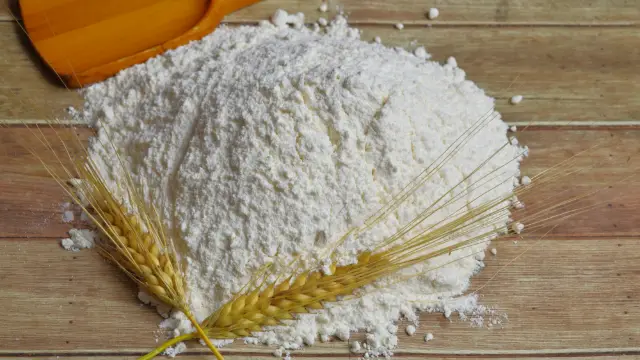
Yes. Use 2 tablespoons of all-purpose flour for every 1 tablespoon of cornstarch, since cornstarch has about twice flour's thickening power. Mix the flour with cold water before it goes in, then simmer the sauce for a few minutes. It comes out opaque and matte, which is fine in gravy, stew and pie filling, and less welcome in a clear, glossy stir-fry sauce.
- 2 tablespoons of flour replace 1 tablespoon of cornstarch in sauces, gravy and soup.
- In fruit pie, King Arthur Baking's chart uses only a little more flour than cornstarch for berries and cherries.
- Never add flour or cornstarch dry to hot liquid, or it clumps.
- Flour contains gluten. For a gluten-free swap, use arrowroot (about 1½ times the cornstarch) or potato starch (2 teaspoons per tablespoon).
- A cornstarch sauce that goes thin usually wasn't boiled, or was stirred too hard afterward.
What's the flour to cornstarch ratio?
2 tablespoons of all-purpose flour for each tablespoon of cornstarch. Bob's Red Mill says cornstarch has twice the thickening power of flour, and University of Illinois Extension gives the same amounts per cup of liquid: 1 tablespoon of cornstarch, or 2 of flour. Cornstarch is pure starch. Flour is ground wheat, so part of every spoonful is protein, gluten included, and less of it is starch.
| Cornstarch in the recipe | All-purpose flour instead |
|---|---|
| 1 teaspoon | 2 teaspoons |
| 1 tablespoon | 2 tablespoons |
| 2 tablespoons | ¼ cup |
| 3 tablespoons | ¼ cup plus 2 tablespoons |
| ¼ cup | ½ cup |
A cup holds 16 tablespoons, and anything in between, or in milliliters, is a job for Hedgehog Chef's free cooking converter. Use the 2 to 1 ratio for gravy, pan sauces, soups and stews. Fruit pie works differently, and has its own numbers below.
How to thicken a sauce with flour instead of cornstarch
Mix the flour with cold liquid first, or cook it in fat, and then give it time on the heat. Starch dropped straight into hot liquid clumps before it can spread out, which is why the Culinary Institute of America starts every slurry in cold liquid.
- Shake the flour with cold water or cold stock in a jar until no dry bits are left. The CIA's starting point for a slurry is 1 part starch to 2 parts cold liquid.
- Pour it into the simmering sauce a little at a time, stirring the whole time.
- Let it simmer, still stirring, for several minutes. Mississippi State University Extension's turkey gravy cooks for 5 to 10 minutes over low heat after the broth goes in.
If the recipe starts with butter or oil in the pan, use that instead. Stir the flour into the fat until it bubbles, then whisk in the liquid. Illinois Extension says flour works best in sauces made with fat, which is how a roux gravy or a cheese sauce is built.
Expect a different look. Illinois Extension describes flour sauces as cloudy and opaque, and cornstarch sauces as transparent and glossy. In brown gravy nobody will notice. In a lemon sauce or a sweet-and-sour glaze, they will.
Does flour work for gravy, pie filling and stir-fry?
For gravy, yes, without a second thought. Flour is the traditional gravy thickener, and our posts on fixing lumpy or thin gravy and gravy without drippings both use it.
For fruit pie, yes, but the 2 to 1 rule doesn't carry over. King Arthur Baking's pie thickener chart uses only a little more flour than cornstarch for juicy fruit, and about 3½ times as much for apples, which need the least thickener of all. In King Arthur's side-by-side test of five thickeners in strawberry-rhubarb pies, the flour filling worked but was cloudier, with a faintly starchy feel in the mouth.
| Fruit | All-purpose flour | Cornstarch | Quick-cooking tapioca |
|---|---|---|---|
| Apples | ¼ cup + 2 teaspoons | 1 tablespoon + 1 teaspoon | 2 tablespoons |
| Cherries | ½ cup | 6 tablespoons + 2 teaspoons | 3 tablespoons + 1 teaspoon |
| Blueberries | ½ cup | 6 tablespoons + 2 teaspoons | ¼ cup |
| Blackberries or raspberries | ½ cup + 2 tablespoons + 1 teaspoon | ½ cup | ½ cup |
King Arthur suggests about 25% more thickener for particularly juicy fresh fruit. With cornstarch, bake until the filling bubbles up through the crust, which King Arthur gives as the sign it has set.
For stir-fry, flour is the weakest swap. A cornstarch slurry thickens the sauce after a minute's boil and leaves it clear and shiny. Flour needs several minutes on the heat, which the vegetables don't have, and turns the sauce opaque. If you have arrowroot or potato starch, use either of those instead. If flour is all there is, simmer the sauce and its flour slurry in a small pan for a few minutes, then pour it over the stir-fry at the end.
Other substitutes for cornstarch
Arrowroot and potato starch both stay clear like cornstarch, and the CIA lists both for slurries made the same way. Bob's Red Mill sells arrowroot as a direct substitute for cornstarch, with no flavor of its own, but it's a little weaker: Cook's Country found that almost 1½ teaspoons of arrowroot thicken as much liquid as 1 teaspoon of cornstarch, and that it turned a butterscotch pudding slimy, so keep it out of milk and cream sauces. Potato starch goes the other way. America's Test Kitchen uses 2 teaspoons of potato starch for every tablespoon of cornstarch, and it thickens before the sauce reaches a full simmer. Bob's Red Mill also says potato starch tolerates higher temperatures than cornstarch.
| Instead of cornstarch | How much | Good to know |
|---|---|---|
| All-purpose flour | Twice as much in sauces | Opaque, needs several minutes of simmering, contains gluten |
| Arrowroot | About 1½ times as much | Clear and flavorless, but turns slimy in dairy sauces (Cook's Country) |
| Potato starch | 2 teaspoons per tablespoon | Thickens at a lower temperature and handles higher heat (America's Test Kitchen, Bob's Red Mill) |
| Quick-cooking tapioca | See the pie chart above | A slightly sticky pie filling. Let it rest 15 to 30 minutes before baking so the tapioca softens (King Arthur) |
| Instant ClearJel | The same amount or a little less, in pies | Holds fillings thick in pies frozen before or after baking (King Arthur) |
If you're cooking for someone who avoids gluten, flour is out. Illinois Extension describes cornstarch as pure starch made from corn, while flour is made from wheat and contains gluten. Arrowroot and potato starch are the swaps to reach for. Check each package for a gluten-free label.
The other fix is not running out. In Hedgehog Chef's pantry, mark cornstarch as a staple, and when it's running low it goes on the shopping list in one tap.
Why do cornstarch sauces go thin?
Usually because the sauce never got hot enough, or because it was stirred hard after it set. The Exploratorium's Science of Cooking says cornstarch has to reach 203°F (95°C) before it starts to thicken, and that once the starch network forms, agitation breaks it and lets the liquid back out. Bob's Red Mill's instructions are to bring it to a boil, stirring constantly, and boil for 1 minute. After that, stir gently or leave it alone.
- Liquid seeping out as the sauce stands is syneresis, which the Exploratorium says is more noticeable when the gel holds eggs or a lot of sugar.
- Egg yolks carry an enzyme, amylase, that breaks down starch. Cook's Illustrated brings pastry cream almost to a boil, about 200°F (93°C) with a few bubbles breaking the surface, to destroy it. Undercooked, the cream won't set as it cools. Cream pie fillings and puddings made with yolks need the same treatment, whether they're thickened with flour or cornstarch.
- Freezing is hard on cornstarch. Ohio State University Extension's freezing fact sheet says flour-thickened sauces and gravies may look curdled after thawing but usually come back together when stirred, and that cornstarch may be less successful. For sauces headed for the freezer it recommends Clear Jel, a modified starch.
Tip: A sauce that has gone too thick loosens with warm stock or water stirred in 2 tablespoons at a time.
Once you've found a swap that works in a recipe, write it down where you'll see it next time.
Questions people ask
Can you use cornstarch instead of flour?
Yes, as a thickener. Use half as much cornstarch as the flour the recipe calls for, because it thickens about twice as well. Mix it with cold water first, then bring the sauce to a boil and boil it for 1 minute.
Can you use flour instead of cornstarch in baking?
When the cornstarch is there to make a cake flour substitute, yes: use all-purpose flour on its own. King Arthur Baking says a cake made with all-purpose flour in place of cake flour turns out similar, with a slightly coarser crumb.
Do you have to cook flour to thicken a sauce?
Yes. Flour and cornstarch only thicken once they're heated in liquid, when their starch gelatinizes. Flour needs longer than cornstarch: Mississippi State University Extension's gravy simmers 5 to 10 minutes after the broth goes in, while cornstarch needs a 1-minute boil.
Is cornstarch gluten-free?
Cornstarch is starch from corn, with no wheat in it, while all-purpose flour is wheat and contains gluten. If you're avoiding gluten, check the package for a gluten-free label. Arrowroot is another thickener without wheat. Use about 1½ times as much of it as the cornstarch, and keep it out of dairy sauces.
Sources, checked on November 2, 2026:
- Bob's Red Mill: Tips for using cornstarch
- University of Illinois Extension: Good gravy, you need a thickening agent
- The Culinary Institute of America: Make a slurry
- Mississippi State University Extension: The Food Factor, turkey gravy
- King Arthur Baking: Pie thickener chart
- King Arthur Baking: What's the best way to thicken fruit pie filling?
- King Arthur Baking: Cake flour vs. all-purpose flour
- Bob's Red Mill: Arrowroot starch
- Bob's Red Mill: Potato starch
- Exploratorium: Science of Cooking, Ask the Inquisitive Cooks
- Cook's Country: Replacing cornstarch with arrowroot
- America's Test Kitchen: Can potato starch be substituted for cornstarch?
- Cook's Illustrated: Perfecting pastry cream
- Ohio State University Extension: Freezing combination main dishes (hosted by K-State)
Bob's Red Mill, King Arthur Baking, America's Test Kitchen, Cook's Country, Cook's Illustrated and Instant ClearJel are trademarks of their owners. Hedgehog Chef isn't affiliated with or endorsed by them.
Spotted something out of date or wrong? Tell us at hello@hedgehogchef.com and we'll fix it.
More like this, once a month
One short email a month from Hedgehog Chef: what's new, one kitchen tip and one post like this. You can also ask to hear when the iPhone or Android app is out. Unsubscribe any time.