How long can food sit out? The 2-hour rule
Thanksgiving dinner goes on the table at 2, the plates are cleared at 3:30, and the turkey has been out since it left the oven at 1. By the time the pie is cut, the turkey has run out of time. This post covers when the 2-hour clock starts, which foods it applies to, and what to do with a dish that went past it.
By Hedgehog Chef · · 8-minute read
The quick answer
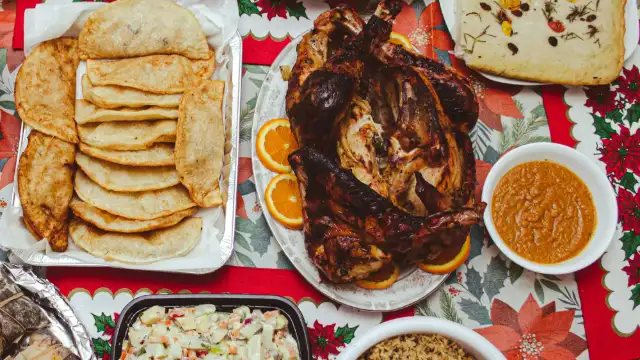
Perishable food can sit out at room temperature for 2 hours at most, or 1 hour if it's above 90°F (32°C), according to the USDA. After that, throw it out. The 2 hours count from when the food left the oven, stove or fridge, and they add up, so an hour on the table today and an hour on the counter tomorrow use them all.
- It covers cooked meat and poultry, rice, pasta, potatoes, gravy, eggs, dairy, cut melon and custard pies.
- Food kept hot at 140°F (60°C) or above, or cold at 40°F (4°C) or below, isn't on the clock.
- Reheating doesn't rescue food that sat out too long, because some bacterial toxins survive cooking.
- Whole fruit and baked fruit pies can stay out longer.
- Food left out overnight goes in the bin, however it smells.
How long can food sit out at room temperature?
2 hours, or 1 hour when it's above 90°F (32°C), as it can be in a parked car or at a summer picnic. That's the USDA's limit for perishable food in the danger zone between 40°F and 140°F (4°C and 60°C), where bacteria grow fastest and can double in number in as little as 20 minutes. The FDA's buffet guidance gives the same limits, and says to discard perishables left out longer unless they were kept hot or cold.
Perishable means more than meat. The FDA's Food Code, the model rulebook for restaurants and stores, lists the foods that need time and temperature control. It names anything from an animal, raw or cooked, and any plant food that has been cooked, which takes in rice, pasta, beans, potatoes and roasted vegetables. Cut melon, cut tomatoes, cut leafy greens and raw sprouts are on it too. Foods too dry or too acidic for bacteria to grow in are off it.
Food that's kept hot or cold isn't on the clock. That means 140°F (60°C) or above for hot food, in a slow cooker or on a warming tray, and 40°F (4°C) or below for cold food, on ice. Check both with a thermometer, because a warm dish or a cold bowl doesn't tell you the temperature of what's in it.
When does the 2-hour clock start?
When the food leaves whatever was keeping it hot or cold. The CDC's advice is to refrigerate food within 2 hours of cooking it, or of taking it out of an appliance that was holding it at a safe temperature. For a turkey, that's the moment it comes out of the oven, so resting and carving use up part of its time, which our post on resting a turkey plans around. For potato salad or a pumpkin pie, it's when the dish comes out of the fridge.
The time also adds up across the day. University of Arkansas Cooperative Extension puts it as a total of 2 hours, not 2 hours from when the dish was served, and UF/IFAS Extension calls it cumulative: 2 hours out of the fridge on the first day plus an hour on the next all count toward bacterial growth. Leftovers that sat on the table for 90 minutes at dinner have 30 minutes left for tomorrow's sandwiches, so make them straight from the fridge and put the container back.
How long can cooked meat, rice and pie sit out?
Cooked meat, turkey and rice all get the same 2 hours. Pie depends on what's in the filling.
| Food | At room temperature | Why |
|---|---|---|
| Cooked meat and poultry: turkey, ham, chicken, roast beef | 2 hours (1 hour above 90°F) | Animal food, cooked or raw, needs temperature control |
| Cooked rice, pasta, potatoes, beans and vegetables | 2 hours | Cooked plant foods are on the FDA's list too |
| Gravy, soup, stuffing and casseroles | 2 hours | Gravy and big batches are common sources of C. perfringens (CDC) |
| Deviled eggs, potato and macaroni salad, cheese dishes | 2 hours | Egg, potato and macaroni salads are often behind staph poisoning (FDA) |
| Pumpkin, pecan, custard and cream pies | 2 hours | Egg-rich fillings, most of them with milk or cream |
| Cut melon, sliced tomatoes, dressed green salad | 2 hours | On the FDA's list once they're cut |
| Baked fruit pies: apple, cherry, berry | 1 to 2 days, covered | King Arthur Baking's storage advice |
| Whole, uncut fruit | No 2-hour limit | Raw whole fruit isn't on the FDA's list |
Rice gets its own warnings because of Bacillus cereus. In rice left warm, the bacteria multiply and make a toxin that causes vomiting. The FDA's Bad Bug Book says this kind of outbreak is mostly linked to rice and other starchy foods, that cooking may kill the bacteria without disabling the toxin, and that the toxin is still active after 30 minutes at 250°F (121°C). Spread leftover rice in a shallow container and get it in the fridge well inside the 2 hours.
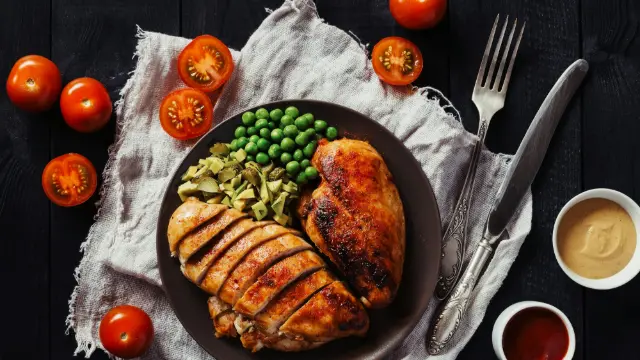
For meat, the 2 hours sit on top of the fridge time: cooked chicken that went in promptly keeps 3 to 4 days, as our post on how long cooked chicken lasts explains, and leftover turkey gets the same. Pies split by filling. Pumpkin is a custard of eggs and milk, so it belongs in the fridge (does pumpkin pie need to be refrigerated? has the details), while King Arthur Baking says baked apple and other fruit pies keep covered at room temperature for 1 to 2 days.
Thanksgiving dinner on the table: a plan for the 2 hours
A holiday meal makes the 2 hours hard to keep, because each dish comes off the heat at a different time and the meal runs long. The CDC says most Clostridium perfringens outbreaks happen in November and December, many linked to turkey and roast beef, and most involve food cooked in large batches and held between 40°F and 140°F.
Give each dish its own deadline, counted from when it came off the heat or out of the fridge. For a 2 PM dinner:
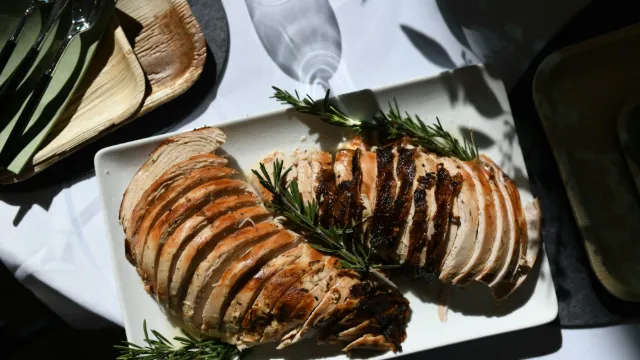
- The turkey leaves the oven at 1:00 to rest. Its deadline is 3:00, so carve what's left and get it into the fridge before dessert.
- Mashed potatoes, stuffing and gravy come off the heat around 1:45, so they're due back by 3:45.
- Deviled eggs and salads leave the fridge at 1:50 and go back by 3:50.
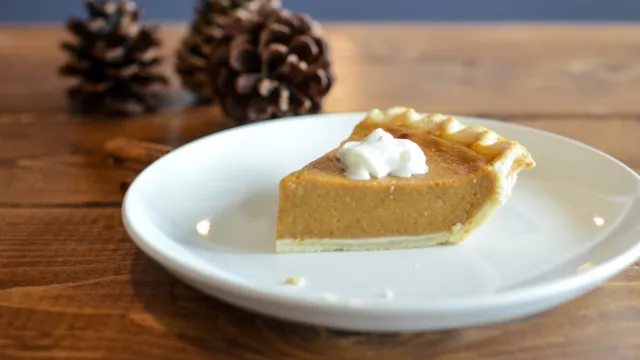
- Pumpkin pie comes out for dessert at 3:30 and goes back by 5:30.
To stretch the time, keep food hot or cold. The FDA's buffet advice is to hold hot dishes at 140°F (60°C) or above in chafing dishes, slow cookers or warming trays, and to check the label, because some warmers only reach 110°F to 120°F (43°C to 49°C). Set cold dishes on ice. Put out small platters and swap in fresh ones from the oven or fridge, and don't top up a dish that's been sitting out. Our post on keeping mashed potatoes warm covers the slow cooker and the double boiler.
The putting away is the step that slips, because at 3 o'clock everyone's still at the table. In Hedgehog Chef, set a reminder of your own in Settings › Notifications, or ask the planner for one. “Remind me at 2:45 to put the turkey away” then comes through at 2:45 as a notification or an email, whichever you've chosen. When the leftovers go in, add them to the fridge in the pantry with the date they have to be eaten by.
Can you reheat food that sat out too long?
No. Reheating to 165°F (74°C) kills bacteria, but some leave toxins behind that heat doesn't break down. The Bad Bug Book says the toxins made by Staphylococcus aureus are highly heat stable and stay active after the bacteria are dead. It lists meat, poultry, egg products, egg and potato salads, cream pies, sandwich fillings and dairy among the foods most often involved. The rice toxin survives half an hour at 250°F (121°C), hotter and longer than any reheating of leftovers.
So food that went past the 2 hours goes in the bin, not back in the fridge, and a night on the counter is far past it. Your nose won't settle the question either way: Washington State University Extension points out that the bacteria behind food poisoning generally don't change how food looks or smells.
Food safety: Next time, get it cold sooner. The USDA's leftovers guidance says hot food can go straight into the fridge, so split big batches into shallow containers and put them in while they're still warm.
Why do some sources say 4 hours?
Because restaurants can work under a different rule. The FDA Food Code lets a kitchen use time instead of temperature for up to 4 hours, on strict terms. The food has to start at 41°F (5°C) or below, or at 135°F (57°C) or above. It's marked with the time it has to go, and at 4 hours it's served or thrown away. It can't go back into the fridge, and the kitchen needs written procedures for the whole thing, ready for the health inspector.
Leftovers at home are the opposite case, since the point is to keep them for another day. For anything you mean to eat again, the USDA's 2 hours is the number to use.
Questions people ask
Can you leave pizza out overnight?
No. Clemson Cooperative Extension's answer is that pizza left out overnight isn't safe to eat, even with no meat on it, because perishable food shouldn't be out of the fridge for more than 2 hours. Reheating it doesn't change that.
Can you keep food in the garage or on the porch when it's cold outside?
Penn State Extension advises against it. Outdoor temperatures can swing above and below 40°F (4°C) from one day or night to the next, food in the sun warms faster than food in the shade, and animals are drawn to it. Use the fridge, or a cooler with ice or ice packs, and keep the porch for drinks that don't need refrigerating.
Can you put hot food straight into the fridge?
Yes. The USDA says hot food can go directly into the refrigerator, so there's no need to let it cool on the counter first. Divide big batches into shallow containers so the middle cools quickly.
How long can food sit out at a picnic or in a hot car?
1 hour, when it's above 90°F (32°C), according to the CDC and the USDA. Keep cold food in a cooler with ice until it's served, and pack the leftovers back on ice as soon as everyone has eaten.
Does food that sat out too long smell bad?
Not necessarily. The bacteria that cause food poisoning generally don't change how food looks, smells or tastes, according to Washington State University Extension. Go by how long it was out, not by the smell.
Sources, checked on November 2, 2026:
- USDA FSIS: “Danger Zone” (40°F–140°F)
- USDA FSIS: Leftovers and Food Safety
- CDC: Preventing C. perfringens food poisoning
- CDC: About C. perfringens food poisoning
- FDA: Serving Safe Buffets
- FDA: Food Code 2022
- FDA: Bad Bug Book, 2nd edition
- University of Arkansas Cooperative Extension: Food safety for the holidays
- UF/IFAS Extension: The scoop on holiday leftovers
- Clemson Cooperative Extension (HGIC): Food safety answers for college students
- Penn State Extension: Is it safe to store food on the porch or in the garage during the winter?
- King Arthur Baking: How long does pie last?
- Washington State University Extension: Is food safe if it looks, smells and feels OK?
King Arthur Baking is a trademark of its owner. Hedgehog Chef isn't affiliated with or endorsed by it.
Spotted something out of date or wrong? Tell us at hello@hedgehogchef.com and we'll fix it.
More like this, once a month
One short email a month from Hedgehog Chef: what's new, one kitchen tip and one post like this. You can also ask to hear when the iPhone or Android app is out. Unsubscribe any time.