How long to rest a turkey before carving
The turkey is out, the thermometer says 165°F, and the whole table wants to know when you're carving. Later than they'd like. This covers how long the bird should sit, how much hotter it gets while it sits, whether foil helps, and how to keep the meat hot once it's sliced.
By Hedgehog Chef · · 8-minute read
The quick answer
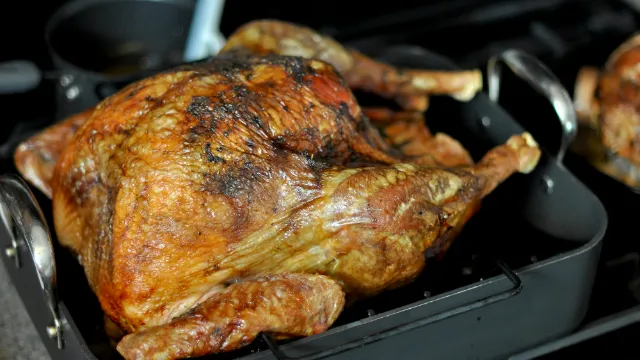
Rest a whole roast turkey 20 to 30 minutes before carving, the range University of Illinois Extension gives, and up to 45 minutes for a large bird. It stays hot far longer than that: in America's Test Kitchen's test, an uncovered 14-pound turkey's breast was still 142°F an hour after leaving the oven.
- Take it out when a thermometer reads 165°F in the thickest part of the breast, the innermost thigh and the innermost wing.
- The breast can keep climbing while it rests, by as much as 10 to 15°F in a big bird.
- Skip the foil for a rest under an hour, or the skin goes soft. Tent it loosely for a longer wait or a cold kitchen.
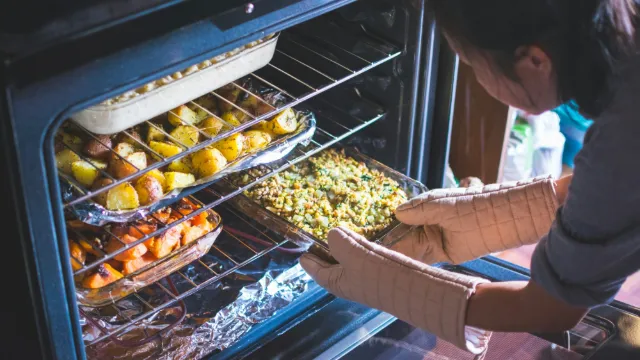
- The rest is when the sides go in the oven and the gravy gets finished.
- Leftovers go in the fridge within 2 hours, the USDA's limit. Start that clock when the turkey leaves the oven.
How long to rest a turkey, by size
At least 20 minutes for any whole turkey, and closer to 45 for a big one. The sources start at 15 or 20 minutes and differ on how long to go past it. University of Illinois Extension's roasting guide says 20 to 30 minutes. University of Wyoming Extension says 15 to 20, and Butterball says about 20. America's Test Kitchen goes longest, at about 45 minutes.
Most of the difference is the bird's size. A large turkey holds more heat, so it can sit longer without going cold, and ATK credits a big bird's size and shape for how well it keeps that heat. Our times:
| What you roasted | Rest | Why |
|---|---|---|
| Bone-in turkey breast, 4 to 8 lb | 20 minutes | Less mass, so less heat to carry it through a long wait |
| Whole turkey, 8 to 14 lb | 20 to 30 minutes | Illinois Extension's range for a whole roast turkey |
| Whole turkey, 14 to 24 lb | 30 to 45 minutes | Holds heat longest: ATK's 18-pounder was still 155°F in the breast after an hour |
How long it can wait is a separate question, with a longer answer. America's Test Kitchen roasted a 14-pound and an 18-pound turkey and left them uncovered in a 78°F kitchen to see how fast they cooled. Both birds were cooked to 160°F in the breast, a little under the USDA's 165°F.
| Minutes out of the oven | 14-lb turkey, breast / thigh | 18-lb turkey, breast / thigh |
|---|---|---|
| 30 | 158°F / 167°F | 162°F / 169°F |
| 60 | 142°F / 150°F | 155°F / 148°F |
| Below 130°F | Nearly 1½ hours | Thighs nearly 1½ hours, breast close to 2 |
ATK used 130°F as the lowest temperature for carving a turkey that still eats warm. Its conclusion was that a whole bird stays warm well beyond the standard 30-minute rest, so a late side dish isn't a reason to carve early.
Carryover cooking: what temperature to pull the turkey
Pull it at 165°F, measured in three places, and expect the breast to keep rising for a while after it's out. Illinois Extension's guide has you check the innermost part of the thigh and the wing and the thickest part of the breast, and every one of them needs to read 165°F (74°C). ATK takes the breast out at 165°F too, and wants 170 to 175°F in the thighs, because leg meat needs the extra heat to render its fat and connective tissue and turn tender, as ThermoWorks explains.
The rise after the oven is called carryover cooking. The outside of a roast is hotter than the middle, and that heat keeps moving inward after the oven door shuts. ThermoWorks, which makes kitchen thermometers, says a large roast or a turkey can rise as much as 10 to 15°F, and that the bigger the piece of meat, the bigger the rise. In a test by Thermapen's UK maker, two turkeys of about 9 pounds (4 to 4.5 kg), each taken out at a set temperature, rose another 6°C and 8°C (11°F and 14°F) as they rested, and the first peaked 13 minutes after leaving the oven. A third, roasted for the time printed on its packet, came out at 97°C (207°F), rose no further, and was dry and overcooked.
Some cooks use carryover to finish the breast. ThermoWorks' turkey guide takes the bird out when the breast reads 157°F (69°C) and lets the rest carry it to 165°F, with the thighs already at 175°F or more. Wyoming Extension says turkey is safe as soon as all parts reach at least 165°F, so if you pull early, check the breast again during the rest and don't carve until it reads 165°F. If it stalls short of that, it goes back in the oven.
Watch out: Don't wait for a pop-up timer. ATK says they're set to pop at 178°F, which is past the point where breast meat starts to dry out. Use a thermometer, and check all three places.
Should you tent a resting turkey with foil?
Not for a normal rest. ATK says not to tent a resting turkey at all, because foil makes the skin soggy and the bird stays hot without it. The birds in the cooling table above were uncovered the whole time.
Tent it for a wait of more than an hour, a cold room, or a small bird, which loses its heat sooner. Keep the foil loose. ThermoWorks says a tent conserves some heat while still letting air circulate, so the surface doesn't steam, and that skin you want crisp needs extra care. Reynolds, which makes foil, covers the roasted turkey and lets it stand 15 minutes before slicing.
Foil also has a job earlier in the day. Illinois Extension starts the turkey under a loose tent of heavy-duty foil and takes it off after 1 to 1½ hours so the skin browns.
Keeping turkey hot for the table
Carve as late as you can and only as much as the table will eat in the first round. A whole bird holds heat for over an hour, and slices start losing it the moment they're cut.
- Warm the platter. ATK warms serving dishes in a 150 to 200°F oven or by filling them with very hot tap water, then drying them, and says a warm dish keeps food hot for 5 or 10 minutes.
- If the carved meat has to wait, cover it with foil and put it in a low oven. Nebraska Extension says most hot foods hold for 15 to 20 minutes in an oven preheated to 200 to 250°F. For longer, check with a thermometer that the meat stays at 140°F (60°C) or above, and turn the oven up if it doesn't.
- Leave the rest on the bone until seconds. On the bird it stays hot far longer than slices fanned out on a platter.
- Serve the gravy hot. Bring it to a boil just before it goes to the table.
Food safety: The USDA wants hot food kept at 140°F or above, and cooked food out of the fridge for no more than 2 hours (1 hour above 90°F). Start counting when the turkey comes out of the oven, since the rest uses up part of it. After dinner, take the meat off the bone, cut it into smaller pieces and refrigerate it in shallow containers. How long leftover turkey lasts covers the days after.
What to do while the turkey rests
Everything that needed the oven. With the turkey out, turn the oven up to around 375°F for the stuffing and casseroles, and finish the gravy on the stove with the drippings. To know when that window opens, the free turkey calculator gives the USDA roasting time for your bird's weight. The Thanksgiving cooking timeline builds Thursday afternoon around that window, and stuffing made a day ahead reheats in it. If the gravy goes lumpy at the last minute, how to fix lumpy gravy has fixes that take less time than the rest.
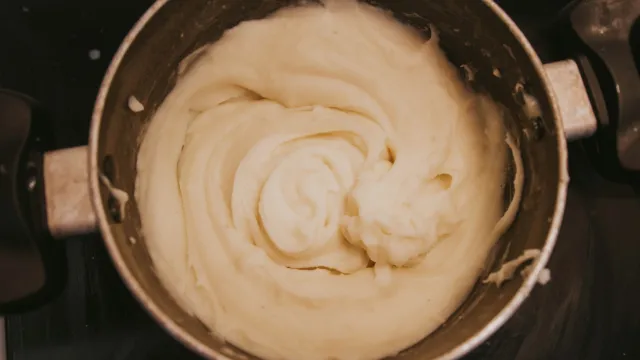
The potatoes are the dish most likely to go cold during the rest, because they're usually done first. How to keep mashed potatoes warm covers the slow cooker, the double boiler and the low oven.
Write the rest into the recipe as its own step, with a number: “Rest 30 minutes, uncovered.” In Hedgehog Chef's cook mode, a step like that becomes a timer button, and you can run it alongside the timers for the sides. Cook a meal takes the turkey, the sides and the time you want to eat, and schedules every step backwards from it. To shrink or grow a recipe for a different number of guests first, paste it into the free recipe scaler.
Questions people ask
Can you rest a turkey too long?
Yes, eventually. In America's Test Kitchen's test, uncovered turkeys took about 1½ to 2 hours to cool to 130°F, the point where carved meat stops tasting warm. Past an hour, tent it loosely with foil, and have it carved and the leftovers in the fridge within 2 hours of leaving the oven.
How long should a turkey breast rest?
About 20 minutes. A bone-in breast is smaller than a whole bird, so it carries less heat into the rest and rises less. Pull it at 165°F in the thickest part, and check again before slicing.
Is turkey that's still pink safe after resting?
Yes, if it reached 165°F. University of Wyoming Extension's guide says all turkey meat, including any that remains pink, is safe once every part has reached at least 165°F. Color tells you nothing. Only a thermometer does.
Do you rest a stuffed turkey longer?
No, but the stuffing has to reach 165°F before the bird comes out. The USDA's stuffing tip sheet says to leave the turkey in the oven until the stuffing gets there, then let it stand 20 minutes before serving. Take all the stuffing out before you store the leftovers.
Why rest a turkey at all?
So it keeps its juice when you slice it, and so it finishes cooking. ThermoWorks says the meat fibers reabsorb some of the moisture they pushed out in the oven during the rest. Carve a turkey straight out of the oven and the juice runs onto the board.
Sources, checked on November 2, 2026:
- University of Illinois Extension: Traditional roast turkey (unstuffed)
- University of Illinois Extension: Carving the turkey
- University of Wyoming Extension: Let's talk turkey (MP-135)
- Butterball: How to carve a turkey
- America's Test Kitchen: How long will turkey stay warm after cooking?
- America's Test Kitchen: How to temp and rest your turkey
- America's Test Kitchen: Getting everything to the table hot
- ThermoWorks: Resting, the final phase of cooking
- ThermoWorks: Turkey temperature tips
- Thermapen (ETI): How to avoid dry Christmas turkey
- Reynolds: Tent a roasted turkey with foil
- Nebraska Extension: Keeping foods warm while other foods get done
- USDA FSIS: Turkey basics, handling cooked dinners
- USDA FSIS: “Danger Zone” (40°F–140°F)
- USDA FSIS tip sheet: Tips to handle stuffing with care (UW-Madison Extension reprint)
America's Test Kitchen, Butterball, ThermoWorks, Thermapen and Reynolds are trademarks of their owners. Hedgehog Chef isn't affiliated with or endorsed by them.
Spotted something out of date or wrong? Tell us at hello@hedgehogchef.com and we'll fix it.
More like this, once a month
One short email a month from Hedgehog Chef: what's new, one kitchen tip and one post like this. You can also ask to hear when the iPhone or Android app is out. Unsubscribe any time.