Blog · Leftovers & using it up
How to make turkey stock from the carcass
Thanksgiving is 26 November this year, and the carcass keeps only as long as the leftovers, so the stock is Friday's job. Here's the method, how long to simmer it, why some pots come out cloudy, and how to get 8 cups of hot stock cold inside the 2-hour limit.
By Hedgehog Chef · · 8-minute read
The quick answer
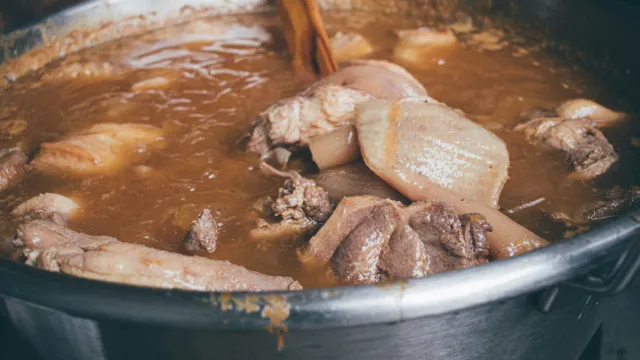
To make turkey stock from the carcass, break the carcass into pieces, pack them into a stockpot and cover them with cold water (about 10 cups for a 12- to 14-pound bird). Add an onion, a carrot, a celery rib, a bay leaf and some peppercorns, bring it to a boil, then turn it down to a bare simmer for 2 hours, skimming the foam. Strain it, chill it in shallow containers within 2 hours, and use it within 1 to 2 days or freeze it.
- Leave some meat and skin on the bones. They add flavor and body.
- Don't salt it. Season the soup or gravy you make from it instead.
- Boiling makes stock cloudy. Keep the surface barely moving.
- A full pot won't cool in time in the fridge. Divide it into containers no more than 3 inches deep and stand them in ice water first.
- Frozen stock is best within 2 to 3 months, by the FDA's chart.
How to make turkey stock from the carcass, step by step
This is America's Test Kitchen's simple turkey stock, with the vegetables from University of Illinois Extension's turkey bone broth. It makes about 8 cups (2 quarts) from the carcass of a 12- to 14-pound turkey.
- Pick off the meat you want for sandwiches and leave the scraps, some skin and the odd bit of meat on the frame. Drumstick and thigh bones go in too.
- Break the carcass into 10 to 12 pieces with your hands or kitchen shears: wings off at the joints, breastbone off the backbone, backbone in 3 or 4 pieces. That's about 4 pounds of bones, and broken up they pack into a layer that less water covers.
- Put the bones in a stockpot with 10 cups of cold water, 1 onion and 2 carrots in chunks, 1 celery rib, 1 clove of garlic, a small handful of parsley stems, 1 bay leaf and 1 teaspoon of peppercorns. No salt.
- Bring it to a boil over medium-high heat, then turn the heat right down so only a few bubbles break the surface.
- Simmer for 2 hours, partly covered, skimming off the gray foam now and then. Top up with water if the bones poke out.
- Strain it through a fine-mesh strainer into a large bowl or pot and throw away the solids. Let it stand about 20 minutes, then spoon off the fat that rises.
- Cool it at once (see the cooling section below) and refrigerate or freeze it.
For a bigger bird, add water until the bones are covered and expect more stock. A 20-pound turkey's carcass is about one and a half times the recipe, and the free recipe scaler multiplies the vegetables to match.
Leave the salt out. Stock usually gets reduced for gravy or simmered down in soup, and every cup that boils off leaves its salt behind. A brined turkey salts the stock through its skin and bones anyway, so taste before seasoning anything made from it.
Roasted vs raw bones for turkey stock
For a leftover carcass, use it as it comes out of the fridge. It was roasted with the bird, so it already makes a golden stock that tastes of roast turkey. America's Test Kitchen doesn't brown it again, to save time and keep the turkey flavor in front.
Raw bones, such as the neck from the giblet bag or wings bought for the purpose, make a paler, milder stock. The neck can go straight in with the carcass. For a whole pot of raw wings, brown them first: gravy without drippings roasts them at 425°F until dark brown, then simmers them for 2 hours, which is how to make stock before Thanksgiving, when there's no carcass yet.
A smoked or heavily seasoned bird makes stock that tastes of the smoke or the rub. That suits a bean soup better than a delicate gravy.
How long to simmer turkey stock
2 hours at a bare simmer. America's Test Kitchen and Illinois Extension both stop there. Other recipes online run 3 to 6 hours, and a longer simmer does no harm if you're home anyway, as long as the heat stays low and the bones stay under water.
For more flavor without more hours, reduce it after straining. Illinois Extension boils 2 quarts of strained broth down to 1 quart. A reduced stock takes half the freezer space, and you add water back when you use it.
Stock with plenty of skin and joints in it often sets to a loose jelly in the fridge. That's gelatin, and it melts as soon as the stock is warm. If yours stays liquid, it's still good stock.
Saved to Hedgehog Chef's recipe library, the stock recipe's “simmer for 2 hours” becomes a timer button in cook mode. A note in the cook log (how big the bird was, whether it was brined) gives next year's batch a head start.
Why stock goes cloudy
It boiled. Cook's Illustrated explains that a rolling boil emulsifies soluble proteins and rendered fat into the liquid. At a simmer the fat stays on top where you can skim it, and the scum sinks to the bottom of the pot instead of breaking up through the stock.
- Start with cold water, and skim the gray foam as it forms on the way up to a simmer.
- Turn the heat down until a bubble breaks the surface every second or two. If the lowest setting is still too hot, set the lid ajar.
- Don't stir. Stirring breaks up the scum and mixes the fat back in.
- Ladle it into the strainer instead of tipping the pot, and leave the last cloudy cup behind.
Cloudy stock is still good to cook with. In turkey soup, gravy or a pot of rice nobody will see the difference.
Cooling a big pot of stock safely
Get it into the fridge within 2 hours and down to 40°F (4°C) within 4. A full stockpot can't do that in the fridge on its own, so split it up and chill it in ice water first.
The USDA's danger zone rule gives cooked food 2 hours out of the fridge (1 hour above 90°F), and its leftovers guidance says to divide large amounts into shallow containers and that hot food can go straight into the fridge. NC State Extension's Cool Hot Foods is blunter about big batches: never use the fridge or freezer to cool large quantities of hot food. A deep pot stays hot in the middle long after the sides feel cool, and it warms everything on the shelf around it.
- Strain the stock into a clean pot or bowl, so you're cooling liquid only.
- Fill a clean sink or a big roasting pan with half ice and half cold water, as NC State suggests.
- Pour the stock into containers no more than 3 inches deep, NC State's limit for thin liquids. Two 9-by-13 pans or several quart containers work. Stand them in the ice water.
- Stir every few minutes. It moves the hot middle out to the cold sides.
- When it reads 70°F (21°C), cover it and move it to the fridge to finish chilling, as NC State says. If the 2 hours are nearly up first, move the shallow containers to the fridge anyway.
Food safety: Don't leave stock on the stove or the counter overnight to cool. Stock that sat out more than 2 hours goes down the drain, and reboiling it doesn't make it safe again.
How long turkey stock keeps
1 to 2 days in the fridge, and 2 to 3 months in the freezer for best quality. Those are the FDA's figures for gravy and meat broth in its storage chart, and they're the shortest of the three sources below. Go by them.
| Source | Fridge (40°F or colder) | Freezer (0°F) |
|---|---|---|
| FDA, gravy and meat broth | 1 to 2 days | 2 to 3 months |
| America's Test Kitchen | 2 days | 4 months |
| University of Illinois Extension | 3 to 4 days | 4 to 6 months |
The freezer times are about flavor. The FDA notes that food kept at 0°F stays safe indefinitely, and the USDA's freezing guide adds that freezing stops bacteria from growing without killing them, so freeze the stock fresh, not on its second day in the fridge. Freeze it in quart bags laid flat for soup, and in an ice cube tray for sauces.
The carcass itself is cooked poultry, which the FDA gives 3 to 4 days in the fridge. If Friday gets away from you, freeze the carcass in a bag and put it in the pot later, straight from frozen. How long leftover turkey lasts covers the meat.
In Hedgehog Chef's pantry, the freezer is a location of its own, so “turkey stock, 2 quarts” can go in with a use-by date three months out, and the pantry reminds you before it's due. When you use it, bring it to a rolling boil, which is how the USDA says to reheat soups, sauces and gravies, and turn it into soup with the turkey you saved. What to do with leftover turkey plans those four days.
Questions people ask
What's the difference between turkey stock and turkey broth?
Stock is made mostly from bones, so it has more body from gelatin. Broth is made mostly from meat and is usually seasoned to drink on its own. A carcass with meat left on makes something in between, and you can use it wherever a recipe asks for either.
Should you cover turkey stock while it simmers?
Partly. America's Test Kitchen simmers its turkey stock covered on low heat for 2 hours, which keeps the water from boiling away. Leaving the lid ajar lets you keep the pot at a bare simmer on a burner that runs hot, and makes skimming easier.
Can you make stock from a turkey carcass that had stuffing in it?
Yes, once the stuffing is out. Scrape out what's left in the cavity before the carcass goes in the pot, or the bread breaks down and turns the stock thick and murky. The USDA's turkey basics already ask for the stuffing to come out of the bird and be refrigerated separately.
Can you make turkey stock before Thanksgiving?
Yes, from raw turkey wings, necks or backs instead of the carcass. Roast them until they're dark brown, then simmer them the same way for 2 hours. Freeze the stock if the holiday is more than 2 days away, since the FDA gives meat broth 1 to 2 days in the fridge and 2 to 3 months frozen.
Why does my turkey stock taste weak?
Usually too much water for the bones. Use about 10 cups for the carcass of a 12- to 14-pound bird, and break the bones up so less water covers them. If it's already made, strain it and boil it down by a third or a half, and add salt only to the dish you make from it.
Sources, checked on November 3, 2026:
- America's Test Kitchen: Simple turkey stock
- Cook's Illustrated: For a clearer stock, simmer, don't boil
- University of Illinois Extension: Turkey bone broth
- NC State Extension: Cool hot foods
- USDA FSIS: Danger zone (40°F to 140°F)
- USDA FSIS: Leftovers and Food Safety
- USDA FSIS: Freezing and Food Safety
- FDA: Refrigerator & Freezer Storage Chart
- USDA FSIS: Turkey Basics, Handling Cooked Dinners
America's Test Kitchen and Cook's Illustrated are trademarks of their owners. Hedgehog Chef isn't affiliated with or endorsed by them.
Spotted something out of date or wrong? Tell us at hello@hedgehogchef.com and we'll fix it.
More like this, once a month
One short email a month from Hedgehog Chef: what's new, one kitchen tip and one post like this. You can also ask to hear when the iPhone or Android app is out. Unsubscribe any time.